what is the "power good signal", according to the atx specification?
Motherboard Ability Connectors
Every PC power supply has special connectors that adhere to the motherboard, giving power to the system processor, retention, and all slotted addition boards (ISA, PCI, AGP). Attaching these connectors improperly can have a devastating outcome on your PC, including called-for up both your power supply and motherboard. The following sections detail the motherboard power connectors used by various ability supplies.
AT Power Supply Connectors
Manufacture standard PC, XT, AT, Baby-AT, and LPX motherboards all use the aforementioned type of principal power supply connectors. These supplies characteristic two principal power connectors (P8 and P9), each with 6 pins that attach the power supply to the motherboard. All standard PC power supplies that use the P8 and P9 connectors have them installed end to end so that the two black wires (basis connections) on both ability cables are next to each other. Some power supplies take them labeled every bit P1/P2 instead. Because these connectors usually have a clasp that prevents them from being inserted backward on the pins on the motherboards, the major concern is getting the two connectors in the right orientation side by side and likewise non missing a pin offset on either side. Following the black-to-black rule keeps you condom. You must take care, however, to make sure that no remaining unconnected motherboard pins exist between or on either side of the 2 connectors after you install them. A properly installed connector connects to and covers every motherboard ability pin. If any power pins are showing on either side of the connectors, the unabridged connector assembly is installed incorrectly, which can result in catastrophic failure for the motherboard and everything plugged into it at the time of power-up. Figure 3.vi shows the P8 and P9 connectors (sometimes besides chosen P1/P2) in their proper orientations when connecting.
 Figure 3.6 The P8/P9 power connectors (sometimes besides called P1/P2) that connect an AT/LPX power supply to the motherboard.
ATX Chief Power Connector
The industry standard ATX power-supply–to–motherboard chief connector is the Molex 39-29-9202 (or equivalent) 20-pivot ATX mode connector (see Effigy 3.7). First used in the ATX form factor power supply, it too is used in the SFX form factor or any other ATX-based variations. The colors for the wires listed in Table 3.iii are those recommended past the ATX standard; however, they are not required for compliance to the specification, and so they could vary from manufacturer to manufacturer. Annotation that I similar to testify these connector pinouts in a wire side view, which shows how the pins are arranged looking at the back of the connector (from the wire and not concluding side). This is because it shows how they would exist oriented if you were dorsum-probing the connector with the connector plugged in.
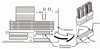 Effigy three.7 ATX mode 20-pin motherboard principal power connector, perspective view.
Figure 3.8 shows a view of the connector every bit if you were looking at it facing the terminal side.
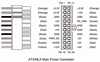 Figure iii.8 ATX/NLX xx-pin main power connector, terminal side view.
Table 3.three ATX Primary Power Supply Connector Pinout (Wire Side View)
| Color | Indicate | Pin | Pin | Point | Color |
| Orangish* | +3.3V | 11 | 1 | +three.3V | Orange |
| Blue | –12V | 12 | two | +3.3V | Orangish |
| Blackness | GND | 13 | three | GND | Black |
| Green | PS_On | fourteen | 4 | +5V | Red |
| Blackness | GND | 15 | 5 | GND | Black |
| Black | GND | 16 | 6 | +5V | Cherry-red |
| Black | GND | 17 | 7 | GND | Black |
| White | –5V | 18 | 8 | Power_Good | Greyness |
| Red | +5V | 19 | nine | +5VSB (Standby) | Regal |
| Red | +5V | twenty | 10 | +12V | Xanthous |
*Might accept a second orangish or chocolate-brown wire, used for +three.3v sense feedback—used past the power supply to monitor iii.3v regulation.
NOTE
The ATX supply features several voltages and signals non seen before, such as the +3.3v, PS_On, and +5v_Standby. Therefore, adapting a standard LPX form cistron supply to make it piece of work properly in an ATX system, is difficult—if not impossible—fifty-fifty though the shapes of the ability supplies themselves are nearly identical.
However, because ATX is a superset of the older AT standard, y'all tin use an adapter to let an ATX power supply to connect to an older Baby-AT manner motherboard. PC Power and Cooling (meet the vendor list) sells this type of adapter.
ATX Auxiliary Power Connector
As motherboards and processors evolved, the need for power became greater. In particular, chipsets and DIMMs were designed to run on three.3v, increasing the current demand at that voltage. In improver, nigh boards included CPU voltage regulators designed to convert +5v power into the unique voltage levels required by the processors the board supported. Eventually, the high current demands on the +3.3v and +5v outputs were proving too much for the number and gauge of the wires used. Melted connectors were becoming more and more common every bit these wires overheated nether these loads.
Finally, Intel modified the ATX specification to add together a second power connector for ATX motherboards and supplies. The criteria was that if the motherboard needed more than than 18A of +3.3v power, or more than 24A of +5v power, an auxiliary connector would exist divers to carry the boosted load. These higher levels of power are normally necessary in systems using 250-watt to 300-watt or greater supplies.
This is a 6-pivot Molex-type connector (meet Figure 3.9). It is keyed to prevent misconnection.
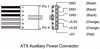 Figure 3.nine ATX auxiliary power connector.
The pinouts of the auxiliary connector are shown in Table 3.four.
Tabular array 3.iv ATX Auxiliary Power Connector Pinout
| Indicate | Color | Pivot | Pin | Bespeak | Color |
| Gnd | Black | 1 | four | +3.3V | Orange |
| Gnd | Black | ii | 5 | +3.3V | Orange |
| Gnd | Black | 3 | 6 | +5V | Cherry |
If your motherboard does not feature a mating auxiliary connector, it probably wasn't designed to consume a large amount of power, and the auxiliary connector from the power supply can be left unconnected. If your power supply is rated at 250 watts or larger, yous should ensure that it has this connector and that your motherboard is capable of accepting it. This eases the load on the main power connector.
ATX12V Connector
Power for the processor comes from a device called the voltage regulator module (VRM), which is congenital into most modern motherboards. This device senses the CPU voltage requirements (ordinarily via sense pins on the processor) and calibrates itself to provide the proper voltage to run the CPU. The design of a VRM enables information technology to run on either 5v or 12v for input power. Most have used 5v over the years, just many are at present converting to 12v because of the lower electric current requirements at that voltage. In addition, the 5v already might be loaded by other devices, whereas, typically, only drive motors utilize the 12v. Whether the VRM on your board uses 5v or 12v depends on the detail motherboard or regulator pattern. Many modern voltage regulator ICs are designed to run on anything from a 4v to a 36v input, and so it is up to the motherboard designer as to how they will exist configured.
Although nearly motherboard VRM designs up through the Pentium Three and Athlon/Duron use 5v-based regulators, a transition is underway to use 12v-powered regulators. This is considering the higher voltage volition significantly reduce the current draw. Equally an example, using the same 65W AMD Athlon 1GHz CPU, you terminate up with the levels of draw at the various voltages shown in Table 3.5.
Table 3.five Levels of Draw at Various Voltages
| Watts | Volts | Amps | Amps at 75% Regulator Efficiency |
| 65 | 1.8 | 36.1 | — |
| 65 | 3.3 | 19.7 | 26.3 |
| 65 | five.0 | xiii.0 | 17.3 |
| 65 | 12.0 | 5.iv | vii.2 |
As you can encounter, using 12v to power the chip results in only 5.4A of describe, or 7.2A assuming 75% efficiency on the part of the regulator.
So, modifying the motherboard VRM circuit to use the +12v power feed would seem simple. Unfortunately, the standard ATX 2.03 power supply design has only a single +12v lead in the main power connector. The auxiliary connector has no +12v leads at all, then that is no help. Pulling upwards to 8A more than through a single 18ga. wire supplying +12v power to the motherboard is a recipe for a melted connector.
To augment the supply of +12v power to the motherboard, Intel created a new ATX12V ability supply specification. This adds a tertiary power connector, called the ATX12V connector, specifically to supply boosted +12v power to the board. This connector is shown in Figure 3.10.
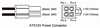 Figure 3.10 An ATX12V power connector.
The pinout of the +12v ability connector is shown in Table 3.6.
Tabular array 3.half-dozen ATX +12v Ability Connector Pinout (Wire Side View)
| Color | Signal | Pin | Pin | Indicate | Colour |
| Yellow | +12V | 3 | ane | Gnd | Black |
| Yellow | +12V | 4 | 2 | Gnd | Black |
If you are replacing your motherboard with a new one that requires the ATX12V connection for the CPU voltage regulator, and yet your existing power supply doesn't have that connector, an easy solution is available. Merely convert i of the peripheral ability connectors to an ATX12V type. PC Ability and Cooling has released just such an adapter that can instantly make any standard ATX power supply into one with an ATX12V connector. The issue is not whether the power supply can generate the necessary 12v—that has ever been bachelor via the peripheral connectors. The ATX12V adapter shown in Figure 3.11 solves the connector problem quite nicely.
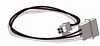 Figure 3.xi ATX12V adapter from PC Power and Cooling.
ATX Optional Connector
The ATX specification also defines an optional half dozen-pin connector. This connector has two rows of three pins each to provide the signals and voltages. The computer tin can apply these signals to monitor and control the cooling fan, monitor the +3.3v power to the motherboard, and provide ability and grounding to IEEE 1394 (FireWire) devices.
This connector has gone through several revisions in pinout since first existence published, and I have yet to run across whatsoever motherboards or ability supplies on the marketplace that actually support it. In fact, the latest ATX/ATX12V Power Supply Blueprint Guide published by Intel states, "Details of the 2x3 'Optional Ability Connector' mentioned in the ATX 2.03 Specification are omitted from this pattern guide until such fourth dimension equally the signals on that connector are more than rigidly divers."
Table 3.7 lists the pinout of the optional connector as defined in the ATX 2.03 Specification.
Table 3.7 ATX Optional Power Supply Connections
| Color | Bespeak | Pin | Pin | Signal | Color |
| White/Black Stripe | 1394R | four | 1 | FanM | White |
| White/Ruddy Stripe | 1394V | 5 | 2 | FanC | White/Blue Stripe |
| Reserved | 6 | three | +3.3V sense | White/Brown Stripe |
The FanM indicate enables the operating system to monitor the status of the ability supply's cooling fan and so that it can take appropriate actions, such as shutting down the arrangement if the fan fails.
The motherboard (under operating organisation control) can employ the FanC signal with variable voltages to command the operation of the power supply's fan, shifting information technology into a low power state or shutting information technology off completely when the system is in slumber or standby fashion. The ATX standard specifies that a voltage of +1v or less indicates that the fan is to shut downward, whereas +10.5v or more than instructs the fan to operate at full speed. The system designer can define intermediate voltages to operate variable-speed fans at various levels. If the ability supply does not include a variable-speed fan circuit, any voltage level higher than +1v on the FanC point is interpreted equally a control to run the fan at its total (and only) speed.
The 1394 connectors are for powering an optional IEEE-1394 (FireWire or iLink) bus on a motherboard. The 1394V pin provides voltages from 8v to 40v to run FireWire peripherals off the coach, and the 1394R pin is a return or ground line for this power circuit. This separate power track keeps the 1394 autobus ability split from the system master ability to forbid interference.
NOTE
The SFX specification also defines the use of a half-dozen-pin command connector, but uses it but to provide a fan control signal on one pin. The other five pins are all reserved for futurity apply.
Dell Proprietary (Nonstandard) ATX Pattern
If you currently ain a desktop system made between 1996 and 2000 from Dell, you will definitely desire to pay attending to this section. A potential booby trap is waiting to nail the unsuspecting Dell organisation owner who decides to upgrade either the motherboard or power supply in his system. This subconscious trap can cause the destruction of the motherboard, power supply, or both! Okay, at present that I have your attention, read on....
As those of you who have attended my seminars or read previous editions of this volume will know, I have long been a promoter of industry-standard PCs and components and wouldn't call up of purchasing a desktop PC that didn't take what I consider an industry-standard form factor motherboard, ability supply, and chassis (ATX, for instance). I've been downwards the proprietary road before with systems from Packard Bell, Compaq, IBM, and other companies that used custom, unique, or proprietary components. For example, during a momentary lapse of reason in the early '90s, I purchased a Packard Bell system. I quickly outgrew the capabilities of the system, so I thought I'd upgrade it with a new motherboard and a faster processor. It was and then that I discovered, to my horror, that LPX systems were non an interchangeable standard. Because of riser card differences, virtually no interchangeability of motherboards, riser cards, chassis, and power supplies existed. I had what I now refer to as a "disposable PC"—the kind you can't upgrade and have to throw away instead. Suddenly, the money I thought I had saved when initially purchasing the organisation paled in comparing to what I'd now take to spend to completely replace information technology. Lesson learned.
Later on several bad upgrade and repair experiences, I decided never again would I be trapped past systems using proprietary or nonstandard components. By purchasing merely systems built with industry- standard parts, I could easily and inexpensively upgrade, maintain, or repair the systems for many years into the future. I have been preaching the gospel of industry-standard components in my seminars and in this book always since.
Of course, edifice your own system from scratch is one manner to avoid proprietary components, simply often that route is more than costly in both time and money than purchasing a prebuilt system. And what systems should I recommend for people who want an cheap prebuilt arrangement but one that uses industry-standard parts and so it tin can be inexpensively upgraded and repaired after? Although many system vendors and assemblers exist, I've settled on companies such equally Gateway, MicronPC, and Dell. In fact, those are really the three largest system vendors that deal direct, and they mostly sell systems that use manufacture-standard ATX form factor components in all their main desktop organization product lines. Or so I thought.
It seems that when Dell converted to the ATX motherboard form factor in mid-1996, it unfortunately defected from the newly released standard and began using peculiarly modified Intel-supplied ATX motherboards with custom-wired power connectors. Inevitably, it also had custom power supplies fabricated that duplicated the nonstandard pinout of the motherboard power connectors.
An fifty-fifty bigger crime than simply using nonstandard ability connectors is that but the pinout is nonstandard; the connectors look similar and are keyed the aforementioned as is dictated past true ATX. Therefore, nothing prevents you lot from plugging the Dell nonstandard ability supply into a new industry-standard ATX motherboard you lot installed in your Dell case as an upgrade, or even plugging a new upgraded industry-standard ATX ability supply into your existing Dell motherboard. But mixing either a new ATX board with the Dell supply or a new ATX supply with the existing Dell board is a recipe for silicon toast. How exercise y'all similar your fried chips: medium or well-done?
Bluntly, I'm amazed I haven't heard more than well-nigh this considering Dell has climbed to the lead in worldwide PC sales. In any case, I figure by getting this information out I can salve thousands of innocent motherboards and ability supplies from instant decease upon installation.
If yous've already fallen victim to this nasty circumstance, believe me, I experience your pain. I discovered this the difficult way as well—by frying parts. At first, I thought the upgraded ability supply I installed in one of my Dell systems was bad, specially considering the dramatic style it smoked when I turned on the system: I actually saw fire through the vents! Practiced thing I decided to cheque the color codes on the connectors and verify the pinout on another Dell system by using a voltmeter before I installed and fried a second supply. I was lucky in that the smoked supply didn't take the motherboard with it; I tin only surmise that the supply fried and then quickly it sacrificed itself and saved the motherboard. You might not exist so lucky, and in most cases I'd look y'all'd fry the lath and supply together.
Call me a fool, simply I didn't call up I'd have to check the color-coding or go out my voltmeter to verify the Dell "pseudo-ATX" power connector pinouts before I installed a new ATX supply or motherboard. You lot'll too notice that motherboard and power supply manufacturers don't similar to supersede these items under warranty when they are fried in this mode due to nonstandard connector wiring.
Dell'due south official explanation for its lack of conformance to the ATX standard was, "In the mid-90s the industry moved to a college use of 3.3v motherboard components. Dell engineers designed a connector that supported the increased utilize of 3.3v current which differed from the manufacture proposed designs that nosotros deemed less than robust." Unfortunately, this explanation doesn't concur much water considering the standard ATX connector incorporated three 3.3v pins, assuasive for up to 18A of current, and the addition of the Auxiliary Connector added two more than pins with 10A of additional current. Dell'southward pseudo-ATX design had only three three.3v pins in the Auxiliary Connector, which could supply just up to 15A to the board. You can meet that even the primary ATX Connector alone had more 3.3v electric current than Dell'south design using two connectors!
Because its technical caption fails to address the result, the merely other reason I can imagine information technology did this is to lock people into purchasing replacement motherboards or power supplies from Dell. What makes this worse is that Dell uses virtually all Intel-manufactured boards in its systems. One system I have uses an Intel D815EEA motherboard, which is the aforementioned board used by many of the other major organization builders, including Gateway and Micron. It'due south the same, except for the power connectors, that is. The departure is that Dell has Intel custom-brand the boards for Dell with the nonstandard connectors. Everybody else gets virtually the same Intel boards, merely with industry-standard connectors.
Tables 3.8 and 3.9 evidence the nonstandard Dell primary and auxiliary power supply connections. This nonstandard wiring is used on Dell's pseudo-ATX systems.
Table 3.eight Dell Proprietary (Nonstandard) ATX Main Power Connector Pinout (Wire Side View)
| Color | Signal | Pin | Pivot | Signal | Color |
| Gray | PS_On | 11 | 1 | +5v | Red |
| Black | Gnd | 12 | two | Gnd | Black |
| Blackness | Gnd | 13 | iii | +5v | Red |
| Black | Gnd | 14 | 4 | Gnd | Black |
| White | –5v | xv | v | Power_Good | Orange |
| Red | +5v | sixteen | 6 | +5VSB (Standby) | Imperial |
| Blood-red | +5v | 17 | 7 | +12v | Yellow |
| Red | +5v | 18 | 8 | –12v | Blue |
| Key (blank) | — | 19 | 9 | Gnd | Blackness |
| Red | +5v | xx | ten | Gnd | Blackness |
Table 3.ix Dell Proprietary (Nonstandard) ATX Auxiliary Ability Connector Pinout
| Pivot | Signal | Colour | Pivot | Bespeak | Color |
| ane | Gnd | Black | 4 | +3.iii | Bluish/White |
| 2 | Gnd | Blackness | 5 | +3.3 | Blue/White |
| 3 | Gnd | Blackness | 6 | +3.3 | Blueish/White |
At commencement I thought that if all Dell did was switch some of the terminals effectually, I could utilize a final option to remove the terminals from the connectors (with the wires attached) and only reinsert them into the proper connector positions, enabling me to use the Dell power supply with an upgraded ATX motherboard in the future. Unfortunately, if you written report the Dell master and auxiliary connector pinouts I've listed hither and compare them to the industry-standard ATX pinouts listed earlier, you'll see that non only are the voltage and point positions changed, only the number of terminals carrying specific voltages and grounds has changed likewise. You could alter a Dell supply to work with a standard ATX board or modify a standard ATX supply to work with a Dell board, but y'all'd have to do some cut and splicing in addition to swapping some terminals around. Usually, information technology isn't worth the time and endeavor.
If you lot practise decide to upgrade the motherboard in any Dell organization purchased between 1996 and 2000, a simple solution is available—only be certain you supplant both the motherboard AND power supply with industry-standard ATX components at the same time. That way nothing gets fried, and you'll be back to having a true industry-standard ATX organisation. If you want to replace just the Dell motherboard, you're out of luck unless you lot get your replacement board from Dell. On the other paw, if yous desire to supervene upon just the power supply, you lot exercise have one alternative. PC Power and Cooling at present makes a version of its high-performance 300W ATX power supply with the modified Dell wiring for about $100. The internals are identical to its industry-standard, high-performance 300W ATX supply (which it sells for near 30% less)—only the number and arrangement of wires has changed.
Fortunately, starting in 2000, Dell switched to using industry-standard ATX ability connections in its Dimension 4300, 4400, 8200, and newer systems. That ways barring whatever other unforeseen glitches, these systems should be more easily upgradable past just replacing either the power supply or the motherboard alone. I, for i, am glad to encounter Dell moving back toward industry standardization because its systems are at present more highly-seasoned to purchase as a starting point for a system that will exist user upgradable and repairable in the future.
Power Switch Connectors
Iii chief types of power switches are used on PCs. They can exist describes as follows:
-
Integral Ability Supply Air conditioning switch
-
Front Panel Power Supply AC switch
-
Front end Panel Motherboard Controlled switch
The earliest systems had power switches integrated or built straight into the power supply, which turned the main AC ability to the organization on and off. This was a unproblematic blueprint, merely because the ability supply was mounted to the rear or side of the organisation, it required reaching around to the back to actuate the switch. Too, switching the AC power directly meant the system couldn't exist remotely started without special hardware.
Starting in the tardily '80s systems began using remote front panel switches. These were essentially the same power supply design as the kickoff type. The but difference is that the AC switch was now mounted remotely (usually on the front panel of the chassis), rather than integrated in the ability supply unit, and connected to the power supply via a iv-wire cable. The ends of the cablevision are fitted with spade connector lugs, which plug onto the spade connectors on the power switch. The cablevision from the power supply to the switch in the instance contains iv colour-coded wires. In add-on, a fifth wire supplying a basis connection to the instance might be included. The switch was usually included with the power supply and heavily compress-wrapped or insulated where the connector lugs attached to forestall electric shock.
This solved the ergonomic problem of reaching the switch, but it all the same didn't enable remote or automated arrangement power-up without special hardware. Plus, you now had a 120v Air conditioning switch mounted in the chassis, with wires carrying dangerous voltage through the system. Some of these wires are hot anytime the organization is plugged in (all are hot with the arrangement turned on), creating a dangerous environment for the average person when messing around inside her system.
CAUTION
At least 2 of the remote power switch leads to a remote mounted AC power switch in an AT/LPX supply are energized with 115v Air conditioning current at all times. Y'all could be electrocuted if y'all touch the ends of these wires with the power supply plugged in, even if the unit is turned off! For this reason, always make sure the power supply is unplugged before connecting or disconnecting the remote power switch or touching any of the wires connected to it.
The four or five wires are color-coded as follows:
-
Brown and blue. These wires are the live and neutral feed wires from the 110v ability cord to the ability supply. These are always hot when the power supply is plugged in.
-
Black and white. These wires carry the Air-conditioning feed from the switch back to the power supply. These leads should be hot only when the power supply is plugged in and the switch is turned on.
-
Green or light-green with a xanthous stripe. This is the ground lead. It should exist connected to the PC case and should assistance ground the power supply to the case.
On the switch, the tabs for the leads are usually colour-coded; if not, yous'll observe that nigh switches have two parallel tabs and two angled tabs. If no color-coding is on the switch, plug the blue and brownish wires onto the tabs that are parallel to each other and the black and white wires to the tabs that are angled away from each other. If none of the tabs are angled, simply make sure the blue and brown wires are plugged into the most closely spaced tabs on one side of the switch and the blackness and white wires on the virtually closely spaced tabs on the other side.
See Figure 3.12 as a guide.
 Figure three.12 Ability supply remote push button push switch connections.
Caution
Although these wire colour-codings and parallel/angled tabs are used on most power supplies, they are non necessarily 100% universal. I accept encountered ability supplies that did not use the same coloring or tab placement scheme described hither. 1 thing is sure: 2 of the wires will be hot with Ac wall electric current anytime the ability supply is plugged in. No affair what, always disconnect the ability supply from the wall socket earlier handling any of these wires. Exist sure to insulate the connections with electrical tape or heat shrink tubing then you won't be able to touch on the wires when working inside the case in the future.
As long equally the blue and brown wires are on the one ready of tabs and the blackness and white leads are on the other, the switch and supply will work properly. If you incorrectly mix the leads, y'all will likely blow the circuit breaker for the wall socket because mixing them can create a direct short excursion.
All ATX and subsequent power supplies that employ the xx-pin motherboard connector employ the PS_ON indicate to ability up the system. Every bit a result, the remote switch does not physically control the ability supply'south admission to the 110v AC power, as in the older-style power supplies. Instead, the power supply'southward on or off condition is toggled by a PS_ON indicate received on pivot 14 of the ATX connector.
The PS_ON signal tin exist generated physically by the figurer's power switch or electronically past the operating system. PS_ON is an agile low point, meaning that the ability supply voltage outputs are disabled (the organization is off) when the PS_ON is high (greater than or equal to two.0v). This excludes the +5VSB (standby) on pin 9, which is agile whenever the power supply is connected to an AC power source. The PS_ON signal is maintained by the power supply at either 3.3v or 5v. This signal is and then routed through the motherboard to the remote switch on the front of the case. When the switch is pressed, the PS_ON signal is grounded. When the power supply sees the PS_ON signal drop to 0.8v or less, the ability supply (and arrangement) is turned on. Thus, the remote switch in an ATX-fashion system (which includes NLX and SFX systems as well) carries upwardly to just +5v of DC power, rather than the total 115v–230v Air conditioning current like that of the older AT/LPX form factors.
CAUTION
The continuous presence of the +5VSB signal on pivot ix of the ATX connector means that the motherboard is e'er receiving standby power from the ability supply when connected to an Ac source, even when the calculator is turned off. As a result, it is fifty-fifty more crucial to unplug an ATX system from the power source earlier working inside the case than it is on an earlier model system.
Source: https://ftp.unpad.ac.id/orari/orari-diklat/teknik/homebrew/power-supply-switching/power-supply.htm
0 Response to "what is the "power good signal", according to the atx specification?"
Post a Comment